A Quiet Kind of Christmas: Building a Winter Weekend Around a Market Town
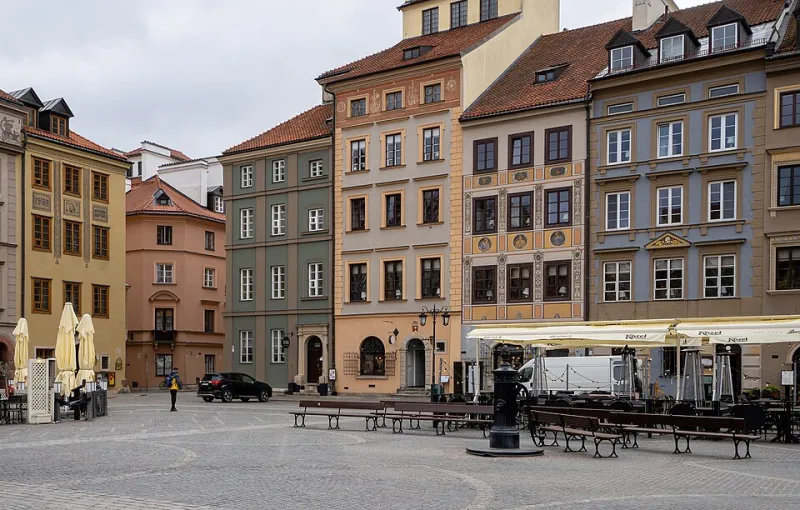
Photo: Igor123121, CC BY 4.0, via Wikimedia Commons
By late November the country has entered its annual state of festive overdrive. Lights switch-ons, funfair rides in pedestrianised high streets, a queue for a grotto that lasts longer than the drive. None of it is bad, exactly. It is just a lot.
There is an alternative, and it does not involve staying home. Take a market town — any market town, your nearest will do — and build the weekend around four small things rather than one big event. The result is a break that costs less, involves fewer elbows and leaves you feeling restored rather than processed.
The four-part template
One good walk. One independent shop. One pub with a fire. One slightly odd local attraction.
That is it. No itinerary beyond that, no timed bookings except dinner. The template works because each element does a different job: the walk clears your head, the shop puts money into a local till, the pub warms you up, and the odd attraction gives you something to talk about on the way home.
One good walk
Aim for ninety minutes to two hours, and choose something with a pub or café at the halfway point. In winter the temptations are frosty towpaths, old railway lines and anything described in a guidebook as “a gentle circuit”. Avoid the ridge you would happily do in July; you are not proving anything.
Rules of thumb: start by eleven so the light does not go before you do, take a torch even if you feel silly, and wear boots with grip rather than smarter shoes. If it is raining sideways, substitute a circuit of the town itself: church, old school, almshouses, war memorial, river. That is a walk too.
One independent shop
Not a browse-and-leave. Go in to buy something small but real — a wedge of cheese from the deli, a paperback from the second-hand bookshop, a jar of something from the farm shop, a pair of gloves because you forgot your own. Small-town shops are not decorations for a weekend; they are the neighbourhood. Spend accordingly.
One pub with a fire
It must be a real fire, or at least an open-looking stove, and it must be on mid-afternoon rather than reserved entirely for dining. Ask locally which one to pick — you want the pub that locals use on a Tuesday, not the one with the blackboard doing “fancy fish”. Book a table if you are eating. Take the corner seat. Stay longer than you planned.
One slightly odd local attraction
Every market town has one, and it is almost never on any of the big websites. A tiny museum in a converted chapel. A sixteenth-century cell in a churchyard. A stuffed bird in a display case with a handwritten label. A carved stone with a story attached that nobody can quite verify. This is the part of the weekend that produces the anecdote.
Choosing your town
- Look for a Tuesday or Thursday market. The day of the market tells you what sort of town it is: livestock, antiques, produce or general tat.
- Pick somewhere with a river or canal. It gives you a default walk without needing to plan.
- Check the size of the cathedral, if it has one. Cathedral towns are reliably good at tea and toilets, in that order.
- Avoid the three towns that everyone recommends in December. The famous ones are famously crowded. The unfamous ones are not.
- Book a pub with rooms rather than a chain hotel out of town. You want to wake up in the place, not beside a roundabout.
Sidestepping the Christmas crush in 2026
As of late 2026, the pattern is well established: light switch-ons tend to fall on the last weekend of November, and the big festive markets on the first and second weekends of December. Those are precisely the weekends to avoid if quiet is what you are after.
Go midweek. Take a Thursday and a Friday off, travel down on the Thursday morning and be home before the Saturday crowds turn up. If you must travel at a weekend, choose the one before the lights go up or the one immediately after — there is a lull, and it is lovely.
Also worth knowing: church carol services are usually a delight, some are candlelit, and nobody minds a visitor. Midnight services on Christmas Eve are the exception — they are full, they are long, and you will be sitting on a radiator.
The printable checklist
- One town chosen, at least slightly unfashionable
- Two nights booked, cancellation allowed
- Walk route checked, torch packed, boots by the door
- One shop mentally earmarked, cash and card both with you
- Pub identified and table booked for the evening
- Odd attraction opening hours confirmed by phone, not by website
- Trains checked for engineering works — always the real risk
- Warm socks, spare socks, waterproofer
- Book, crossword, playing cards
- Small cash for honesty boxes, church restoration funds and raffle tickets
Etiquette for a small-town weekend
Small towns are generous to visitors who behave like guests. A few gentle conventions, then, and none of them onerous:
Buy something before you ask for directions. Any shopkeeper will help you regardless, but it is kinder to be a customer first.
Do not photograph people's houses. Church, market square and river are fair game. Somebody's front door and hanging baskets are not.
Park where you are told. The verge outside the village hall is not a car park, however empty it looks. It drains badly and someone will notice.
Keep the dog on the lead near livestock and near anyone over eighty.
Ask at the pub, not at the internet. If you want to know what is on, which bakery is best and whether the museum opens on Saturdays, the person pulling the beer knows within about four seconds.
Never say “there isn't much round here, is there?” There is. You have not been told about it yet.
Leave the loo as you found it, and the pub table tidy. Small kindnesses are the entire currency of a weekend in a place that is somebody's home rather than a destination.
What it costs
Modestly. Two nights in a decent pub, two cooked breakfasts, one proper dinner, a museum donation and a bit of shopping can come in comfortably under what a single night at a big-city hotel would set you back in December. The walk is free. The fire is free once you have bought a pint. The odd little museum asks for a pound and gives you a memory worth ten.
Which, when you think about it, is what the whole season is supposed to be about.